Bitget Wallet has reported a significant increase in onchain activity as the usage of crypto wallets transitions from primarily trading to everyday spending. According to data released on December 30, 2025, the finance app has seen heightened engagement across trading, payments, and asset management, marking a pivotal change in how users engage with cryptocurrency.
The data indicates that self-custodial wallets are evolving into essential financial tools, facilitating not just trading but also spending and managing assets. This shift reflects an expanding adoption of cryptocurrency beyond its initial trading-focused user base. Notably, the use of stablecoins for earning and payment purposes has continued to grow, even as overall market activity experienced a slowdown towards the year’s end.
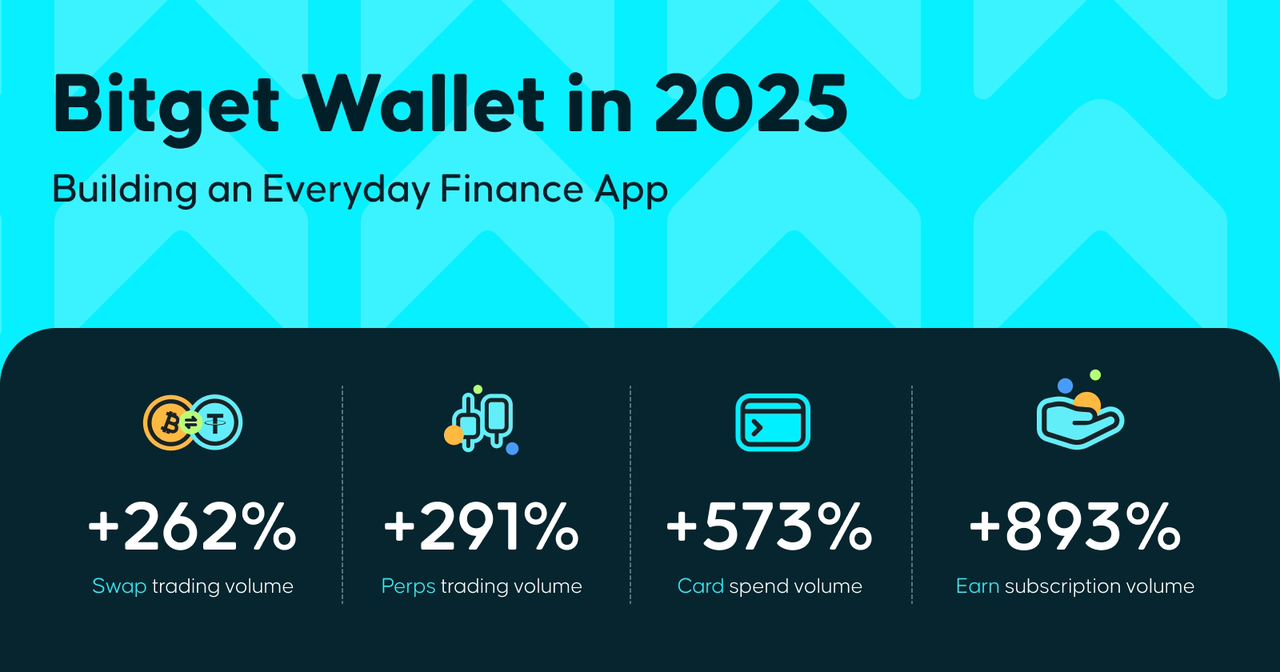
Throughout 2025, onchain trading activity on Bitget Wallet remained robust. Monthly swap trading volume surpassed $900 million, representing a remarkable 232% year-on-year growth. Users are increasingly utilizing decentralized exchange routing, which allows access to a broader array of assets across various chains. Similarly, onchain derivatives trading saw impressive growth, with monthly perpetual trading volume nearing $5 billion, up 291% compared to the previous year. The ratio of decentralized to centralized perpetual futures trading volume has tripled, reaching a record 18.7%, indicating a significant migration toward transparent, onchain execution.
Payments Become a Key Driver of Wallet Usage
In 2025, payments emerged as a crucial component of wallet usage. The spending volume through the Bitget Wallet Card has increased more than sixfold since its launch in July 2025. This surge reflects a broader rise in retail-focused stablecoin activity, with global stablecoin transaction volumes estimated at $46 trillion annually. Over the year, Bitget Wallet expanded its payment capabilities, incorporating card-based spending, national QR payment systems, direct bank transfers in select markets, and in-app crypto shopping. These enhancements demonstrate steady progress in integrating crypto payments into daily retail and financial transactions.
Alongside the growth in payment activities, demand for onchain yield products has also risen. Bitget Wallet’s Earn offerings recorded quarterly subscription volumes approaching $200 million, which is more than ten times higher than at the beginning of 2025. This surge is largely attributed to stablecoin-focused yield offerings and partnerships with established decentralized finance (DeFi) protocols. The increasing interest in predictable onchain returns comes as market conditions have turned more cautious.
The broader DeFi landscape has also expanded, with total value locked across DeFi protocols reaching approximately $161 billion in the third quarter of 2025, one of the highest levels seen outside previous peaks.
“The data from 2025 points to a clear shift in how wallets are used,”
said Jamie Elkaleh, Chief Marketing Officer of Bitget Wallet. “They are increasingly functioning as everyday finance apps, where users trade, spend, and manage money directly onchain.”
As the industry looks ahead to 2026, Bitget Wallet is poised to build on these trends. The company plans to enhance payment access, support a wider range of tokenized assets, and further reduce friction in onchain financial activities. These developments underscore the growing role of wallets in mainstream cryptocurrency adoption.
For those seeking more information, Bitget Wallet offers additional insights on its blog, providing updates on the evolving landscape of cryptocurrency and its applications in daily life.
Bitget Wallet is designed as an everyday finance app that simplifies the use of cryptocurrency for a broader audience. With over 80 million users worldwide, it provides an all-in-one platform for sending, spending, earning, and trading crypto and stablecoins, backed by robust blockchain technology. The platform features global on- and off-ramps and full self-custody, enabling faster, fairer, and borderless onchain finance, supported by advanced security measures and a $700 million user protection fund.