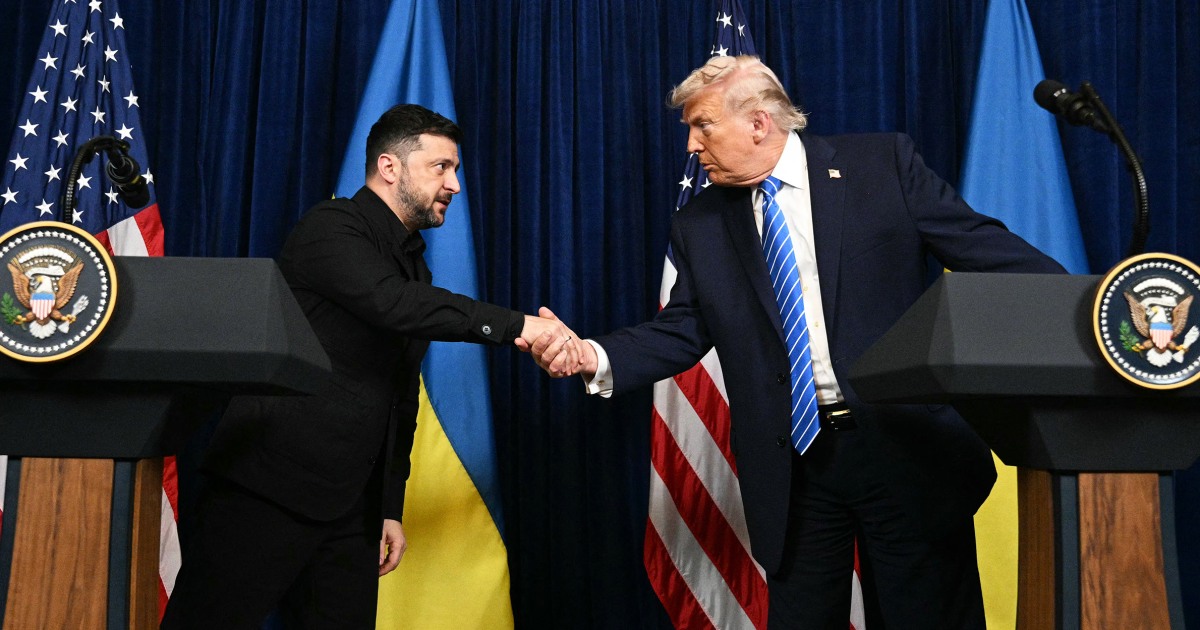
Negotiations aimed at resolving the ongoing conflict in Ukraine faced significant hurdles following discussions between U.S. President Donald Trump and Ukrainian President Volodymyr Zelenskyy at Trump’s Mar-a-Lago estate. Although both leaders expressed optimism about the future of peace talks, lingering territorial disputes and security guarantees remain critical sticking points.
Following their nearly three-hour closed-door meeting, Trump and Zelenskyy reported that they were “very close” to reaching an agreement, estimating that they had made progress on approximately 90% of the necessary terms. However, Trump highlighted that there are still “one or two very thorny issues” that could determine the success of the negotiations.
During a WhatsApp chat with reporters on March 4, 2024, Zelenskyy provided insight into one area where progress appears to have been made. He stated that Trump offered legally binding security guarantees for Ukraine, which would last for 15 years. Zelenskyy emphasized his desire for these guarantees to extend to 50 years, given Ukraine’s ongoing conflict with Russia since the annexation of the Crimean Peninsula in 2014 and the subsequent support for separatists in eastern Ukraine.
While the Ukrainian leader noted that Trump was open to extending the duration of these guarantees, he acknowledged that the specifics of the proposal remain vague. The situation raises questions about how Russia would respond to such a security framework.
Territorial Disputes Loom Large
Control over key territories, particularly the eastern Donbas region and the strategically significant Zaporizhzhia Nuclear Power Plant, remains a major obstacle in the peace talks. Trump’s 20-point peace plan, which has evolved through weeks of diplomacy, includes these contentious issues. Ukraine currently maintains control over parts of the Donbas region, but Russia demands full control, a position President Vladimir Putin has not wavered from.
The Zaporizhzhia Nuclear Power Plant, which is currently occupied by Russian forces, is another critical point of contention. Each side seeks to assert control over this facility in any potential agreement. American negotiators have previously suggested establishing a “free economic zone” in Donbas, but Zelenskyy stated there is “no detailed concept” yet, and any such arrangement would require consultation with Ukrainian society.
Zelenskyy proposed that the entire 20-point peace plan be submitted to a referendum in Ukraine. He noted that this would necessitate a ceasefire of at least 60 days, a condition Moscow has dismissed. The Kremlin insists it will only agree to a permanent peace agreement, a stance Trump indicated he understands.
Before the meeting with Zelenskyy, Trump engaged in a lengthy phone call with Putin, discussing the peace plan in detail. Following their discussions, Kremlin spokesperson Dmitry Peskov confirmed that Moscow agrees with Trump’s assessment that peace talks are advancing but reiterated that Ukraine must fully withdraw from the Donbas region.
Future of Negotiations Uncertain
Putin’s military strategy remains aggressive, as he received updates from his generals about the situation in Donbas during a televised meeting. He asserted that Russian forces are positioned to “liberate” the entire region, which reflects a continued commitment to assert military control if diplomatic efforts fail.
Peskov indicated that another call between Trump and Putin is expected “in the very near future.” He suggested that this follow-up conversation may provide further clarity on the outcomes of the Trump-Zelenskyy discussions. At present, there is no indication that a direct conversation between Putin and Zelenskyy is forthcoming.
Trump expressed belief that Putin is genuinely interested in pursuing peace; however, Zelenskyy remains skeptical. He emphasized the need for consistency between Putin’s words and actions, stating, “It is important that the actions and words of the Russian leader coincide.”
As the situation develops, the world watches to see whether a lasting resolution can be achieved in Ukraine, a nation still grappling with the consequences of conflict and territorial disputes.