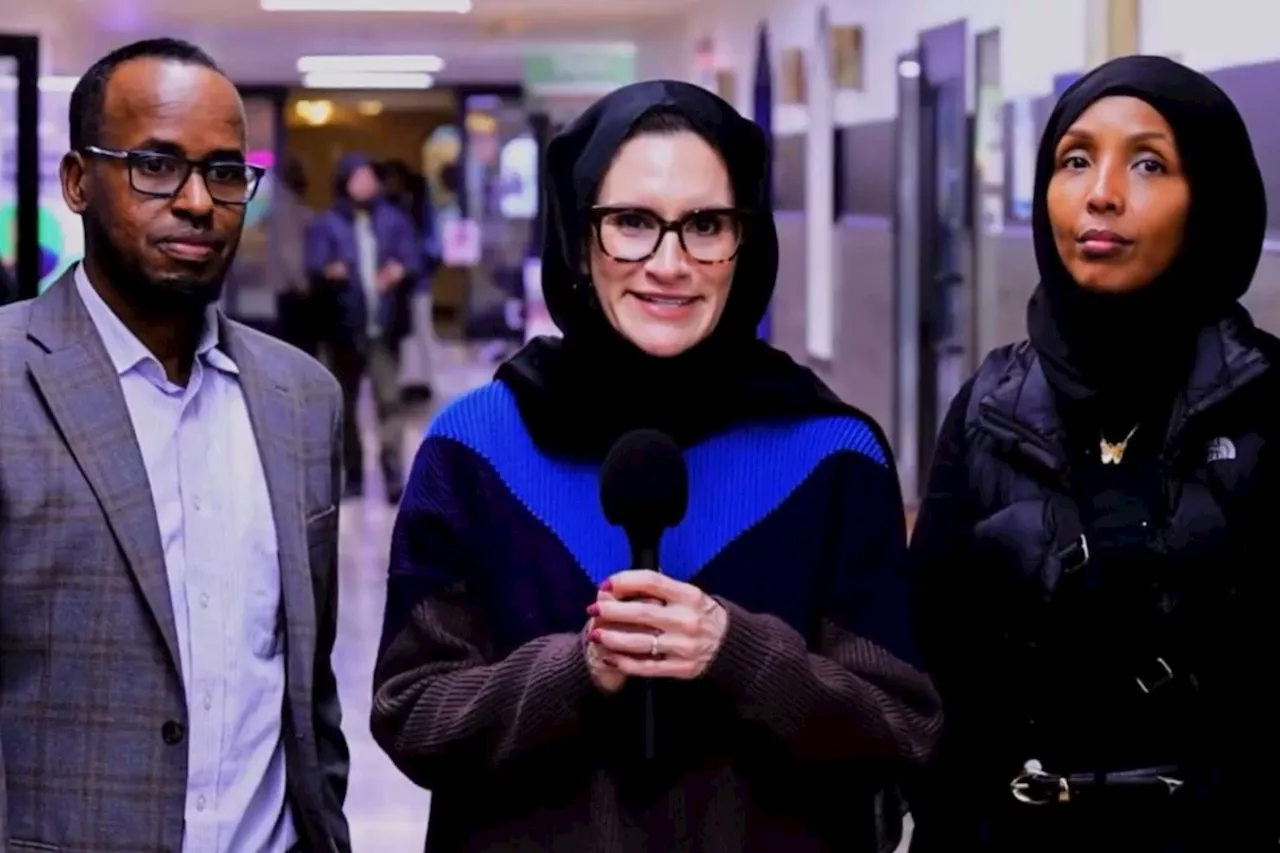
Minnesota’s Lieutenant Governor, Peggy Flanagan, has drawn significant criticism following her recent appearance in a hijab during a visit to the Karmel Somali Market in Minneapolis. Flanagan, who is of Catholic and Native American heritage, stood alongside local Somali leaders, expressing gratitude and solidarity with the community. In a segment aired on Somali-language television, she began her remarks with the Arabic greeting “Salam alaikum,” emphasizing that “the Somali community is part of the fabric of the state of Minnesota.”
The backlash against Flanagan intensified as conservative commentators reacted sharply. The incident occurred amid heightened scrutiny of the Somali community following a federal investigation into alleged fraud schemes involving significant sums of taxpayer money. Donald Trump, the former president, has been vocal in his criticism of Somali migrants, particularly in light of a recent Justice Department report alleging that over $250 million was improperly claimed through fraudulent healthcare schemes.
Flanagan’s visit comes as she positions herself as a leading Democratic candidate for the U.S. Senate seat being vacated by Tina Smith in the upcoming 2026 election. She encouraged Minnesotans to support local businesses and called for solidarity among immigrant communities, stating, “We’ve got your back.” Despite her intentions, the symbolism of her hijab sparked immediate condemnation from conservative figures.
Former Trump strategist Steve Bannon criticized Flanagan on social media, accusing her of yielding to an “entitled Somalian thug ethos.” Far-right activist Laura Loomer went further, declaring that any politician who embraces Islam should be removed from office. Additionally, conservative commentator Amy Mek described the hijab as a “political uniform,” suggesting that Flanagan was pandering to the community for political gain, while failing to address broader electoral concerns.
The criticism has drawn parallels to previous political gestures, such as when Democratic lawmakers wore African kente cloth during the George Floyd protests in 2020. Representative Tom Emmer characterized Flanagan’s appearance as a political stunt aimed at winning over “far-left radicals” in the Twin Cities.
Compounding the situation, federal prosecutors have uncovered extensive fraud schemes targeting aid programs in Minnesota, with losses potentially exceeding $9 billion. As detailed by First Assistant U.S. Attorney Joe Thompson, up to half of the federal funds distributed since 2018 may have been misappropriated. This has intensified scrutiny of the Somali community, with the majority of those charged being Somali Americans, raising cultural and political tensions.
In response to the unfolding scandal, Minnesota Governor Tim Walz has ordered a third-party audit of the affected programs and temporarily halted payments to them. The governor condemned Trump’s derogatory remarks about the Somali community, asserting that such comments serve to “stoke division and fear.”
Local leaders have also weighed in, emphasizing that fraud should be addressed through the legal system rather than as a reflection of community identity. Ahmed Samatar, a professor of international studies at Macalester College, highlighted the need for accountability while stressing that the actions of a few should not define the entire community.
As Flanagan’s campaign for the Senate progresses, she faces a competitive primary race, notably against U.S. Representative Angie Craig, who represents a more moderate stance within the Democratic Party. With the political landscape increasingly polarized, Flanagan’s actions and the backlash they provoked illustrate the complex dynamics at play in Minnesota’s evolving political scene.
The situation remains fluid, and further developments are expected as the investigation into fraud schemes continues and the 2026 Senate race heats up.