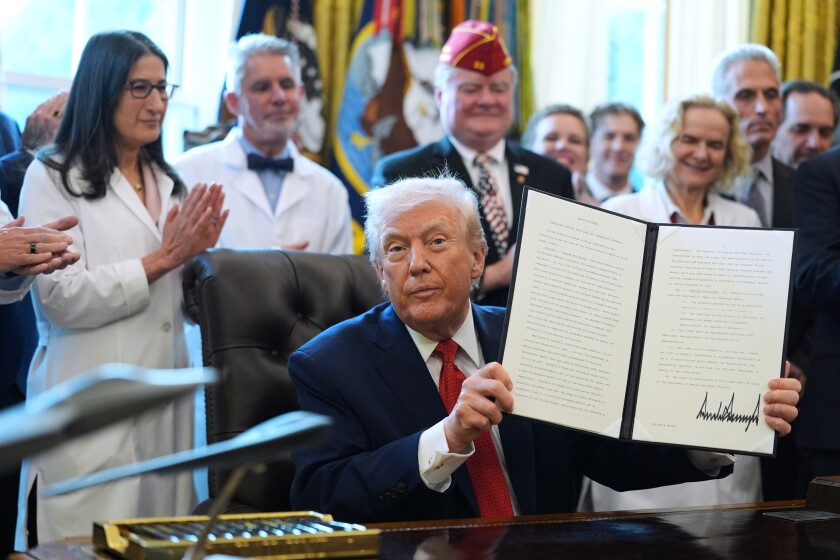
President Donald Trump has ordered the reclassification of marijuana from Schedule I to Schedule III under the Controlled Substances Act. This decision acknowledges the therapeutic potential of marijuana while simultaneously addressing the federal government’s long-standing stance on the drug. The reclassification aims to facilitate medical research, although it does not legalize marijuana for medical use or affect the legal status of state-licensed cannabis businesses.
The move comes nearly four decades after Francis Young, the former chief administrative law judge at the Drug Enforcement Administration (DEA), argued that marijuana should not be classified as a Schedule I substance. Schedule I includes drugs deemed to have a high potential for abuse and no accepted medical use, such as heroin and LSD. Despite Young’s findings in 1988, which stated that marijuana had accepted medical uses and was one of the safest therapeutic substances, the DEA maintained its Schedule I classification until now.
In a significant review completed by the U.S. Department of Health and Human Services (HHS), the agency found credible scientific support for marijuana’s medical applications, including its effectiveness in treating pain, nausea, and vomiting. The HHS concluded that marijuana’s dangers do not warrant its classification as a Schedule I drug. The review indicated that most users do not experience dangerous outcomes from marijuana use, thus supporting a move to Schedule III.
Merrick Garland, the Attorney General, accepted HHS’s recommendation in May 2024, paving the way for Trump’s executive order. While the reclassification will ease the regulatory burden for medical research on marijuana, it does not equate to legalization. Medical use of marijuana will still require Food and Drug Administration (FDA) approval for specific cannabis-based products.
Despite the limitations of the reclassification, the change may offer benefits for state-licensed cannabis businesses. Currently, these entities operate under federal prohibition, which complicates their financial operations. The reclassification will allow them to claim standard deductions on their income taxes, alleviating some of the high effective tax rates they face.
Although Trump emphasized that his order does not legalize marijuana, the political landscape surrounding cannabis has shifted significantly. As of now, 40 states have legalized marijuana for medical purposes, and 24 states allow recreational use, reflecting a growing public sentiment against federal prohibition. The conflict between state laws and federal regulations continues to pose challenges, as many Americans oppose the current federal stance on marijuana.
Trump’s order marks a pivotal moment in the ongoing debate over marijuana legality and medical use. While it does not provide full legalization, it represents a significant acknowledgment of the evolving understanding of marijuana’s potential benefits and the need for comprehensive research. As the implications of this change unfold, the landscape of cannabis regulation in the United States may continue to evolve.