Recent research has re-ignited interest in the axion, a theoretical particle proposed to address challenges within the strong nuclear force. By examining old data from the Hubble Space Telescope, astronomers sought to determine how these elusive particles could influence the cooling rates of white dwarfs, the dense remnants of dead stars.
The axion, first conceptualized decades ago, initially faded from scientific discussions after early searches in particle collider experiments yielded no results. However, its potential role in explaining dark matter has spurred renewed investigations. Researchers suggest that axions could exist in vast quantities throughout the universe without being directly detectable.
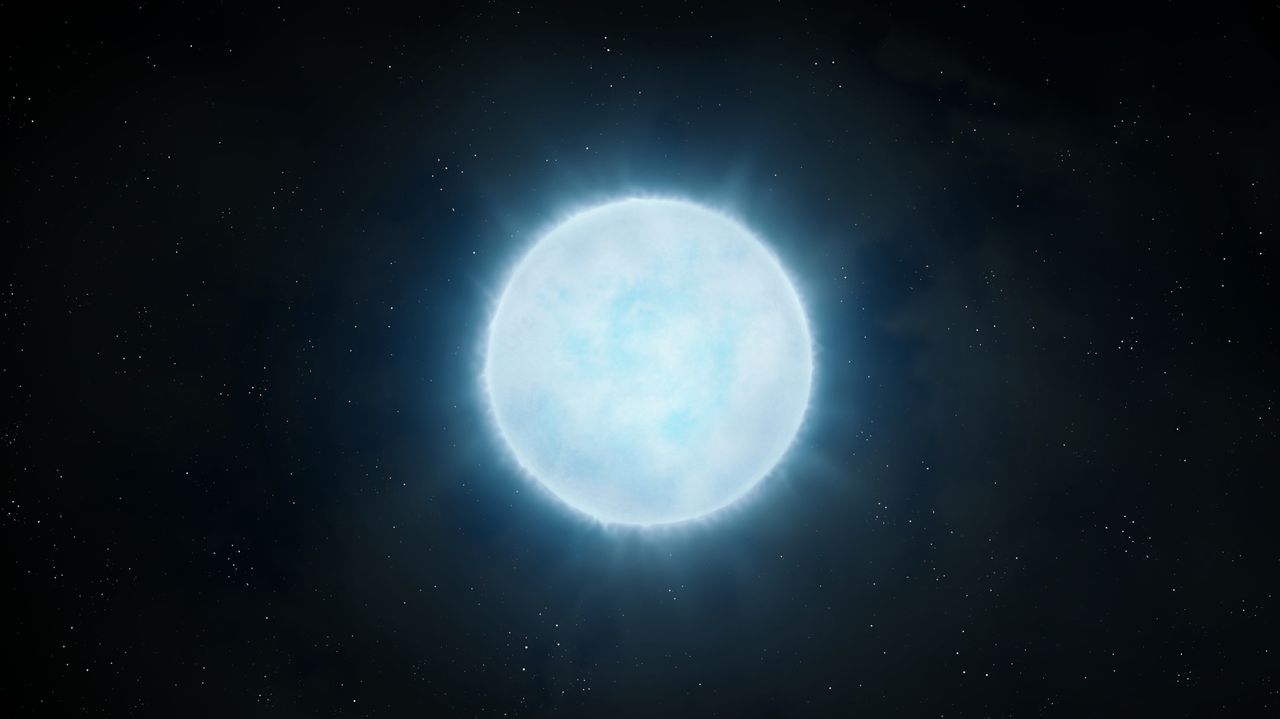
In a preprint paper published in November 2025 on the open-access platform arXiv, a team of astronomers employed theoretical models alongside archival data to evaluate the presence of axions. Their focus was on white dwarfs, which are among the densest known stellar objects, capable of compressing the mass of the sun into a volume smaller than Earth.
White dwarfs maintain stability via a phenomenon known as electron degeneracy pressure. This occurs when a substantial number of free electrons resist gravitational collapse, as dictated by quantum mechanics. Some theoretical models propose that axions could be generated by high-velocity electrons. Inside a white dwarf, electrons move at nearly the speed of light, suggesting they could produce significant quantities of axions.
As axions escape from the white dwarf, they would carry away energy, resulting in a faster cooling rate for these stars. Notably, white dwarfs do not generate energy independently, so any significant loss would lead to more rapid temperature decreases than typically expected.
To investigate this hypothesis, researchers utilized advanced simulations to model white dwarf evolution, factoring in potential axion cooling effects. They then compared their findings with observational data from the globular cluster 47 Tucanae. This cluster is particularly valuable for such studies, as it contains white dwarfs that formed around the same time, offering a consistent sample for analysis.
Despite their comprehensive modeling, the researchers found no evidence of axion-induced cooling in the white dwarf population of 47 Tucanae. The study did, however, establish new parameters regarding the interaction between electrons and axions, concluding that electrons are unlikely to produce axions more efficiently than once in a trillion attempts.
While this outcome does not eliminate the possibility of axions, it indicates that direct interactions between electrons and axions are improbable. The findings highlight the need for innovative approaches in the ongoing search for these elusive particles.
As the quest for understanding dark matter continues, astronomers are now tasked with developing even more sophisticated methods to explore the universe’s hidden components. The implications of this research extend beyond theoretical physics, potentially reshaping our comprehension of the cosmos and its fundamental constituents.