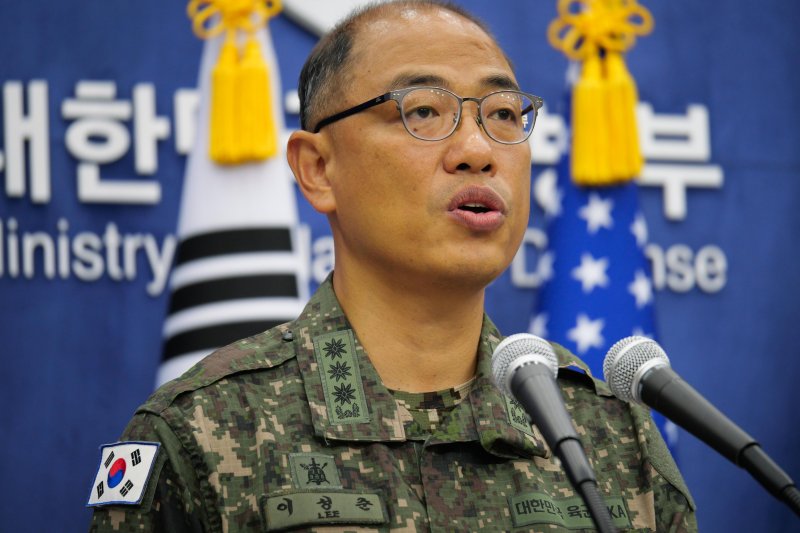
UPDATE: South Korea’s Defense Ministry has just announced a significant shift in its operational priorities, moving from a defense-centric approach towards a focus on restoring trust with North Korea. This urgent development, confirmed on December 21, 2023, aims to ease military tensions through renewed military dialogues and related initiatives.
The ministry revealed plans to reorganize its structure, including the revival of the North Korea Policy Division, which had been previously dissolved and replaced by the North Korea Strategy Division amid rising tensions under the Yoon Suk-yeol administration. This restructuring signifies a pivotal change in strategy, as officials aim to foster inter-Korean trust and cooperation.
In a recent briefing, the Defense Ministry emphasized that the new division will focus on developing negotiation strategies for military talks and managing South Korea’s delegation. The revival of this division aligns with the current government’s reconciliation policy towards North Korea, reflecting a commitment to dialogue and confidence-building measures.
The North Korea Policy Division played a crucial role during the Moon Jae-in administration, particularly in the lead-up to the landmark September 19, 2018 inter-Korean military agreement. This agreement was seen as a significant step towards peace on the peninsula, and the ministry aims to restore its principles by addressing military tensions across air, ground, and sea domains.
“The name change signifies an emphasis on trust restoration between the two Koreas,”
the Defense Ministry stated, underlining the importance of building a foundation for effective inter-Korean military talks. The ministry’s new approach includes measures to prevent accidental clashes, starting with airspace management.
In addition to the restructuring of the North Korea Policy Division, the Defense Ministry will also civilianize the role of the defense minister’s military adviser. This position will now be called “defense adviser” and will be filled by a senior civilian official, enhancing civilian oversight within the ministry.
The planned amendments will also abolish the Resource Management Office and create a new vice minister-level organization dedicated to overseeing AI-related functions, including logistics and combat power. This transformation aims to streamline operations and ensure a robust defense strategy moving forward.
As South Korea navigates this significant policy shift, the global community is watching closely. The implications of these changes could redefine inter-Korean relations and impact regional stability in Northeast Asia.
Looking ahead, observers will be keen to see how these new strategies unfold and whether they will successfully foster an environment conducive to peace and reconciliation on the Korean Peninsula. Stay tuned for further updates as this situation develops.