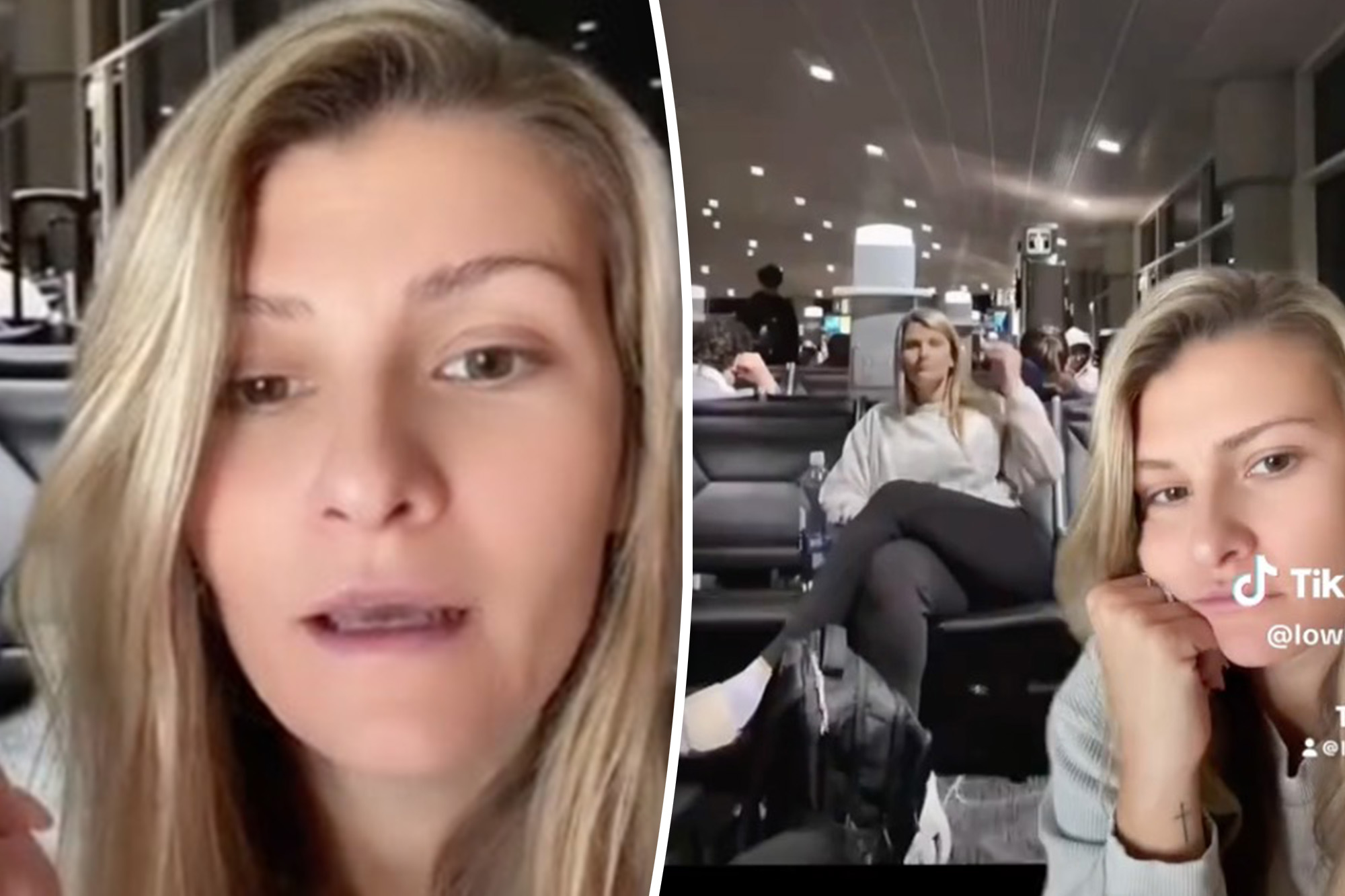
A woman from Tampa, Florida, has raised awareness about a disturbing trend of secret filming at airports after discovering footage of herself recorded without her consent. Lauren Britt was approached by an unknown man while waiting in a lounge for her flight to Boston. This seemingly innocuous interaction quickly turned unsettling when Britt learned that the man had filmed their conversation covertly, leading her to share her experience on social media.
In her video, which gained traction on TikTok, Britt described the moment she was approached. “Here I am, minding my business at the airport, and this guy starts to talk to me,” she recounted. The footage was spotted by her brother circulating on Instagram, prompting Britt to reveal the alarming ease with which the man was able to record her without her knowledge.
The technology behind this covert filming is linked to the recent release of Meta‘s Ray-Ban Meta AI glasses, which hit the market in 2024. While designed to assist low-vision users with features like text reading and object identification, these glasses come equipped with built-in cameras, microphones, and speakers. The potential for misuse has sparked significant concern, as evidenced by Britt’s unsettling experience.
Britt’s case is not isolated. Another individual, a woman from Sydney, Australia, reported a similar incident involving a US content creator using the same type of glasses. The woman described feeling “violated and disgusting” when the video of their interaction was later shared with his 1.3 million followers on Instagram. “I was just strolling along, reading the news, but when I looked up, I saw that a man was about to approach me,” she explained.
The rise of these discreet recording devices has raised questions about privacy rights. Each Australian state has its own surveillance laws governing the recording of conversations. Under the Surveillance Devices Act in New South Wales, unauthorized recording can result in penalties of up to five years in prison. However, the legality becomes murky in public spaces, such as airports.
Public reaction to these incidents has been vocal, as women express alarm over the implications of such technology. Comments on Britt’s video reflect widespread concern, with viewers questioning the ethics of using such devices. “Why are these even a thing?” asked one commenter, while another remarked, “That’s such an invasion of privacy.”
The issue extends beyond just social media trends. In a related incident, a US TikToker known as @itspolokid faced backlash for secretly recording women on Australian beaches. Although he amassed a significant following by approaching women under the guise of compliments, his actions prompted reports to local police. Investigations were conducted, but no charges were filed.
As awareness of these incidents grows, the conversation around privacy and consent in public spaces becomes increasingly critical. Women everywhere are re-evaluating their interactions with strangers, especially those wearing glasses that could potentially record without their knowledge. The intersection of technology and personal privacy remains a pressing issue, prompting calls for stricter regulations and greater public awareness.