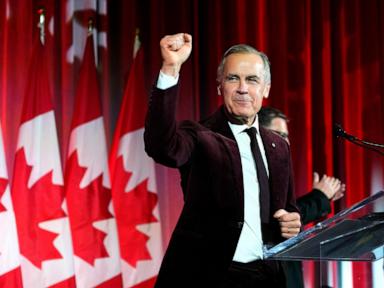
Canada and the United States plan to initiate formal discussions to review their free trade agreement in mid-January 2024. This announcement came from the office of Canadian Prime Minister Mark Carney, who informed provincial leaders that Dominic LeBlanc, the country’s trade representative for U.S.-Canada relations, will meet with American counterparts to commence these discussions.
The review will focus on the United States-Mexico-Canada Agreement, commonly known as USMCA, which is scheduled for a comprehensive review in 2026. The original deal was negotiated by former U.S. President Donald Trump, who included a clause allowing for potential renegotiation in that year. Carney’s update to provincial leaders highlights the importance of these discussions for Canada, which relies heavily on trade, with over 75% of its exports going to the U.S.
Trade dynamics between the two nations have been tense, particularly following a campaign led by Ontario’s provincial government that advocated against certain tariffs. In October, Trump suspended trade talks aimed at reducing tariffs after the advertisement campaign. Despite this, Carney noted that the two countries were close to reaching an agreement on tariff relief for key sectors such as steel and aluminum before the dialogue was interrupted.
Trade Impacts and Future Considerations
Tariffs have notably affected several sectors of the Canadian economy, with industries like aluminum, steel, automotive, and lumber feeling significant pressure. During the recent meeting, Carney discussed trade irritants raised by U.S. Trade Representative Jamieson Greer, indicating these issues are part of a broader conversation regarding continental trade relations. Greer emphasized that the upcoming review of the USMCA will depend on addressing U.S. concerns about Canadian policies concerning dairy products, alcohol, and digital services.
The relationship between the two countries is critical, as Canada serves as the top export destination for 36 U.S. states. Approximately $3.6 billion CAD (equivalent to $2.7 billion USD) worth of goods and services cross the border each day. Furthermore, Canada supplies about 60% of U.S. crude oil imports and 85% of U.S. electricity imports. The nation is also a leading foreign provider of steel, aluminum, and uranium to the U.S.
Carney also highlighted Canada’s role in supplying critical minerals essential for national security, which has drawn interest from the Pentagon. This aspect of trade, he pointed out, presents opportunities but does not guarantee access for the U.S. “It’s a potential opportunity for the United States, but it’s not an assured opportunity for the United States,” Carney remarked, stressing that Canada has other international partners keen to engage in trade.
As discussions are set to commence, both nations will be closely watching the outcomes, which may redefine aspects of their trading relationship moving forward. The scheduled meetings between Carney and the provincial premiers in Ottawa early in the new year will likely set the stage for the negotiations ahead.