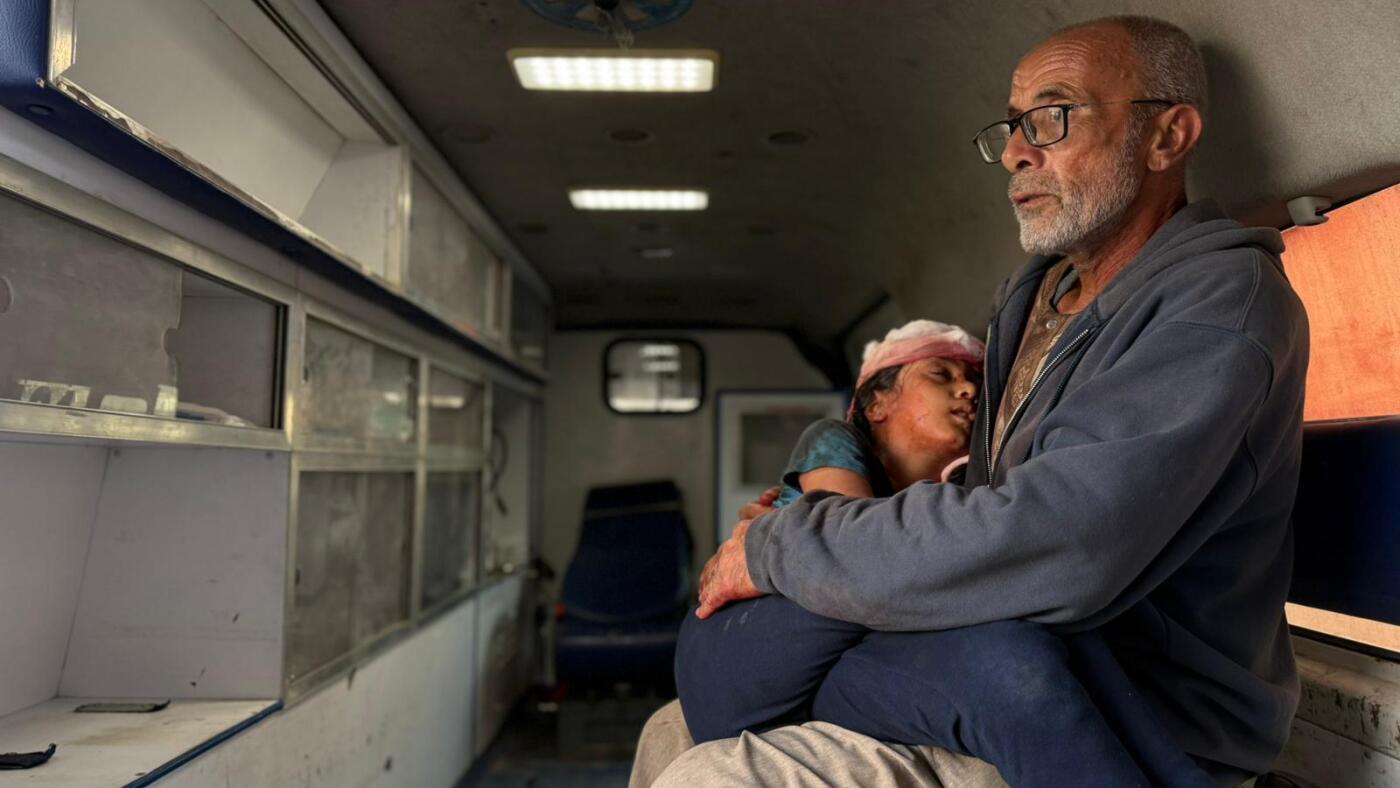
When 10-year-old Bayan Al-Ankah was reportedly shot and killed by the Israeli military in Gaza last week, she became part of a tragic statistic reflecting the ongoing violence in the region. Her death occurred amidst a fragile ceasefire between Hamas and Israel, a situation that is increasingly precarious due to continuous Israeli military operations in Gaza. Mediators from Qatar and Egypt express concern that the ceasefire could collapse under the weight of these near-daily attacks.
The future of the U.S.-backed ceasefire hinges on two critical developments: the deployment of an international force in Gaza and the disarmament of Hamas. Yet, fundamental disagreements among involved nations complicate the implementation of these steps. The U.S. aims to have international troops on the ground by early 2026, but this timeline faces significant obstacles.
The U.S. State Department has outlined a vision where these international troops would support the demilitarization of Gaza and dismantle terrorist infrastructure. Despite this, many countries are hesitant to send troops that would confront Hamas directly regarding its weaponry. Following a mandate from the United Nations Security Council, international troops are authorized to operate in Gaza until the end of 2027, yet their specific role remains undefined.
This week, U.S. officials convened representatives from various countries in Doha to discuss the formation of the International Stabilization Force, or ISF. Although the meeting was focused on planning, no countries have formally committed to troop deployments as of yet. While the U.S. has not released the names of participating countries, reports indicate that nations like Italy, Egypt, Indonesia, Azerbaijan, and Turkey are among those being considered for troop contributions.
At the Doha Forum, Turkish Foreign Minister Hakan Fidan expressed that Turkey could play a pivotal role in deploying troops, but emphasized that their mission should be peacekeeping along a border zone between areas controlled by Hamas and Israel, not to engage in disarming Hamas directly. He stated, “We shouldn’t expect from the ISF work that has not been completed by Israeli security forces.”
Other Muslim-majority countries, including Egypt, have also indicated their reluctance to send troops to Gaza for the purpose of forcibly disarming Hamas. Egyptian Foreign Minister Badr Abdelatty suggested that the ISF’s mandate should focus on peacekeeping rather than peace enforcement, advocating for monitoring operations to commence as soon as possible due to ongoing ceasefire violations by Israel.
Israel maintains that Hamas is actively undermining the ceasefire by attempting to rearm. This sentiment was underscored by an Israeli airstrike last week that killed a senior Hamas military commander, which the Israeli government justified by alleging he was involved in rearming efforts.
Israeli Prime Minister Benjamin Netanyahu expressed skepticism about the effectiveness of an international force, asserting that it may not achieve the primary objective of disarming Hamas. He remarked, “Our friends in America want to try and establish a multinational force to do the job. I told them… please, be my guest.”
Concerns about the potential participation of Turkey in the ISF persist, as Israel views Turkey as a country sympathetic to Hamas. Furthermore, Israel has stated it will not withdraw its troops from Gaza until the region is fully demilitarized.
The timing of disarmament and Israeli troop withdrawal remains a contentious issue. Qatari Foreign Ministry spokesman Majed Al-Ansari noted ongoing disagreements among nations regarding the sequencing of these actions, indicating that “every lack of decision on a lot of these issues provides time for the ceasefire to collapse.”
In discussions on disarmament, Hamas has indicated a willingness to consider laying down arms under certain conditions. Bassem Naim, a negotiator for Hamas, stated that while the group is open to a ceasefire lasting five to ten years, any disarmament discussions must be linked to a serious political resolution that leads to the establishment of a Palestinian state.
Hamas has also signaled its acceptance of the ISF as a peacekeeping force, provided it acts as a buffer between Israeli forces and Palestinian civilians. Naim stressed that any deployment should not occur within Palestinian population centers, and that international forces must understand the complexities of the situation before any discussions on disarmament take place.
The humanitarian situation in Gaza continues to deteriorate amidst these diplomatic efforts. Mediators from Egypt and Qatar have reported that Israel is not allowing sufficient aid into Gaza, despite claims of daily deliveries. The United Nations has indicated that many families are still facing severe food shortages. Basic medicines remain scarce, and the aftermath of recent conflict has left a significant portion of Gaza’s infrastructure heavily damaged.
As winter approaches, families in Gaza are struggling to cope with the cold. A recent severe storm further exacerbated the conditions, leading to the destruction of temporary shelters and resulting in fatalities. The Gaza Health Ministry reported that at least two infants died due to exposure in the storm, while others succumbed to collapsing structures.
With the next steps of the ceasefire in limbo, the humanitarian crisis deepens. Aid agencies are urging for more substantial support to meet the urgent needs of the population. The situation remains dynamic, with the potential for significant ramifications depending on the decisions made by international actors in the coming weeks.