The ongoing discussion between science and religion remains a profound topic, with perspectives that highlight both the strengths and limitations of each. In a recent piece, Tom McKone articulated that while science relies heavily on evidence and objective inquiry, it does not entirely answer existential questions about the origin of life, the meaning of existence, or the afterlife.
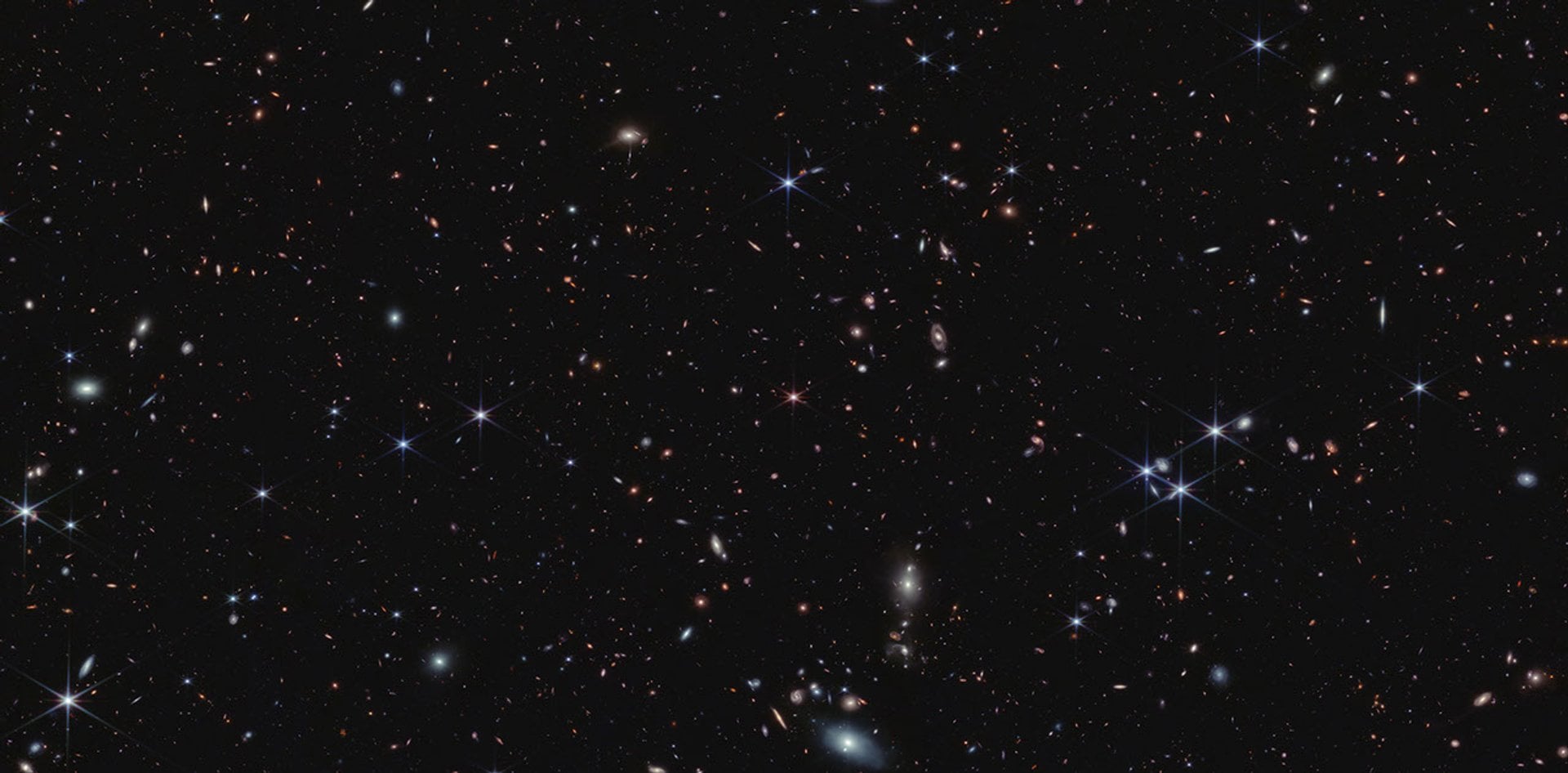
The scientific community has made significant strides in understanding the universe. According to McKone, the theory of relativity, introduced by Albert Einstein, reveals that the universe began as a singularity approximately 13.7 billion years ago. The Big Bang theory suggests that this event not only initiated the formation of light and matter but also gave rise to space and time itself. Current scientific models propose that the universe is boundless, and researchers have effectively described how it could emerge through natural processes, largely without invoking the need for a divine creator.
As scientists continue to investigate the origins of life, various hypotheses have emerged, primarily focusing on chemical processes that could lead to the formation of life. Many believe that understanding these processes is within reach, suggesting a purely naturalistic explanation for life on Earth. The anthropic principle often comes into play in these discussions, where some argue that the universe’s specific constants allow for life as we know it. Four fundamental constants, including the masses of electrons and protons, are believed to be finely tuned for our existence.
Yet, McKone argues that this perceived fine-tuning may be a misinterpretation. Instead, he posits that humans are fine-tuned to the universe rather than the other way around. The vastness of space is largely uninhabitable, with only certain stars, like our sun, providing the stable conditions necessary for life. He notes that the formation of the sun and Earth took billions of years, suggesting a long and seemingly wasteful process before human life emerged, which has existed for less than 0.01% of the planet’s timeline.
The question of what occurs after death has been a significant point of contention. McKone references neuroscientific findings that pinpoint specific brain functions responsible for consciousness and decision-making. When the brain ceases to function, he argues, the body decomposes, leading to the conclusion that if a spirit exists, it would inevitably dissipate.
McKone also critiques the Christian narrative of resurrection, citing that the earliest Gospel, attributed to Mark, lacks a definitive resurrection account. He highlights how later Gospels, such as those of Matthew and Luke, sought to fill gaps left by earlier texts, raising questions about the authenticity of these additions. The passage from 2 Peter, which claims that time is perceived differently by the divine, serves as an acknowledgment of the delayed promise of Jesus’ return.
In a reflective conclusion, McKone shares his personal views on mortality, stating that he expects to return to the earth after death, without any expectation of an afterlife. He expresses a commitment to living a fulfilling life while contributing positively to the world around him.
John Klimenok Jr., a resident of Plainfield, underscores the value of individual agency in making the world a better place, regardless of one’s beliefs regarding the cosmos or the divine. His perspective illustrates a humanistic approach to life, emphasizing the importance of living meaningfully in the present.