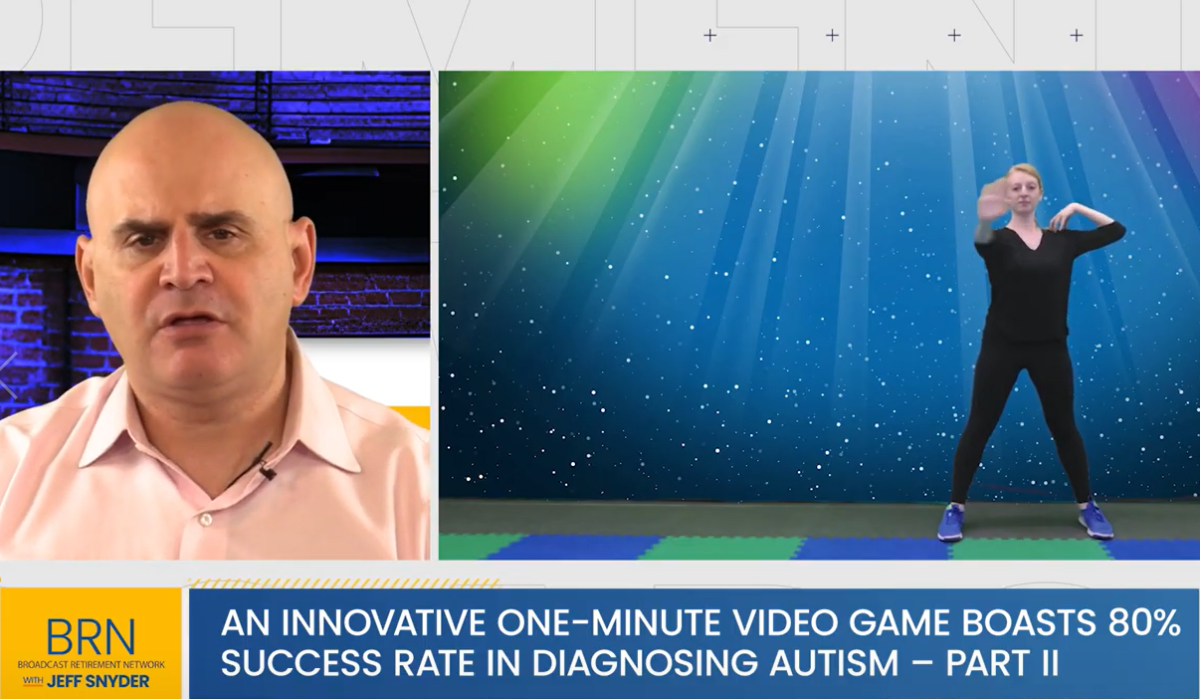
BREAKING: A new video game called KAMI is revolutionizing autism diagnosis with an impressive 80% success rate. This innovative tool, developed by experts at the Nottingham Trent University and the Kennedy Krieger Institute, offers a much-needed advancement in assessing autism spectrum disorder (ASD) as of July 15, 2023.
During an urgent discussion on the Broadcast Retirement Network, Dr. Bahar Tungenc and Dr. Stewart Mostofsky revealed how KAMI distinguishes children with autism from their neurotypical peers effectively. This breakthrough comes at a critical time when traditional diagnostic methods, heavily reliant on behavioral assessments, often lead to delays and inaccuracies.
WHY IT MATTERS NOW: Autism diagnoses are crucial for early intervention, yet many children remain undiagnosed or misdiagnosed due to outdated assessment techniques. KAMI not only offers a rapid evaluation but also provides the potential for remote assessments, crucial for families in underserved areas.
KAMI works by having children imitate simple actions performed by an avatar, allowing the game to analyze their motor imitation skills through advanced algorithms. This method is based on research indicating that individuals with autism frequently struggle with imitation, a fundamental aspect of learning social skills.
Dr. Mostofsky highlighted the importance of leveraging technology in autism evaluation, stating, “There is a clear need to potentially leverage technology for a number of reasons,” particularly to expand access for families facing geographical barriers to specialized healthcare.
The game has shown promising results in distinguishing between children with autism and those with attention deficit hyperactivity disorder (ADHD), further validating its effectiveness.
Currently, KAMI remains a research tool, and while it has not yet been widely rolled out for clinical use, both doctors are optimistic about its future. “We are working to develop KAMI for broader application, especially using common two-dimensional cameras,” Dr. Tungenc explained.
Parents and clinicians eager to utilize this innovative tool will need to wait as the team continues to refine KAMI for practical implementation. However, the excitement surrounding its potential impact on autism diagnosis is palpable.
WHAT’S NEXT: As the developers work on scaling up KAMI for general use, stakeholders in healthcare and education are encouraged to join discussions about its application. The ultimate goal is to make this technology accessible to practitioners and families, which could transform autism diagnostics and improve early intervention strategies.
This groundbreaking development is a beacon of hope for many families affected by autism, paving the way for faster, more accurate diagnoses and ultimately better support for children on the spectrum. Share this urgent news to spread awareness about the future of autism evaluation!