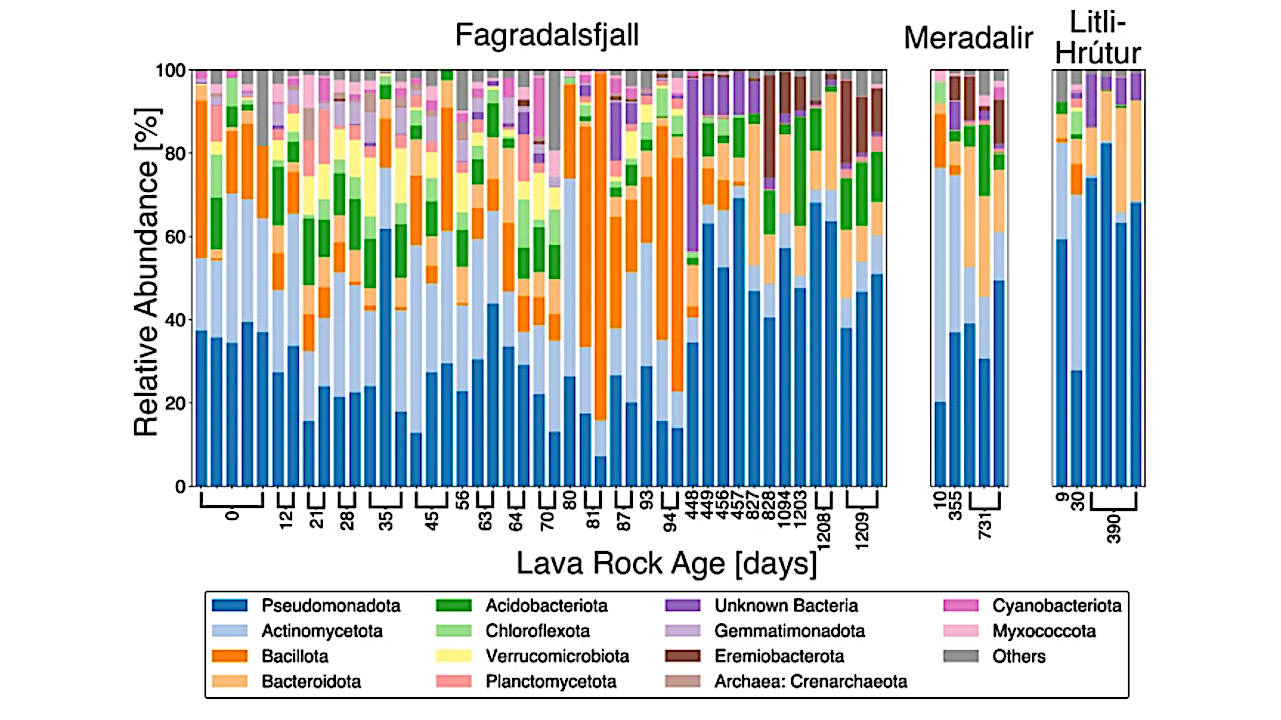
Recent research has shed light on the microbial communities emerging from the Fagradalsfjall Volcano in Iceland, following three significant eruptions between 2021 and 2023. This study, utilizing the volcano as a natural laboratory, tracked how microbial life colonizes freshly formed lava over a three-year span. The findings present a detailed account of how barren landscapes can rapidly transition into thriving ecosystems.
The research team collected samples biweekly during the initial 2021 eruption and at various intervals in the subsequent years. This comprehensive dataset provides valuable insights into the dynamics of primary succession—the process through which life re-establishes itself in newly formed environments. The study highlights a two-stage microbial colonization process: an initial phase of rapid establishment followed by stabilization as winter approaches.
One of the key aspects of this study involves the collection of samples from different sites, including those on solidified lava just hours old. Researchers established a total of 18 sampling sites at Fagradalsfjall, along with others at Meradalir and Litli-Hrútur. This extensive monitoring allowed scientists to observe a natural ecological triplicate as the same system erupted in consecutive years.
Understanding Microbial Assembly Processes
Employing various methodologies, including alpha and beta diversity analysis, phylogenetic null modeling, taxa volatility assessments, and Bayesian source tracking, the study reveals a predictable pattern in microbial community assembly. The research indicates that the initial colonization involves a diverse range of microbial species, which stabilizes as environmental conditions change.
A random forest regression model, developed from the 2021 eruption data, successfully predicts the microbial successional stages observed during the eruptions in 2022 and 2023. This predictive capability underscores the dynamic nature of microbial life in harsh environments.
The implications of these findings are significant, as they not only enhance our understanding of microbial ecology but also provide insights into how ecosystems can recover and adapt in the wake of volcanic activity. The research highlights the resilience of life and its ability to thrive in extreme conditions, offering valuable lessons for ecological studies and environmental management.
As the study continues to draw attention within the scientific community, it was published in Communications Biology, marking a pivotal contribution to the field of ecology. This work emphasizes that even in the most inhospitable environments, life finds a way to establish itself and flourish, expanding our knowledge of Earth’s ecosystems and their intricate processes.