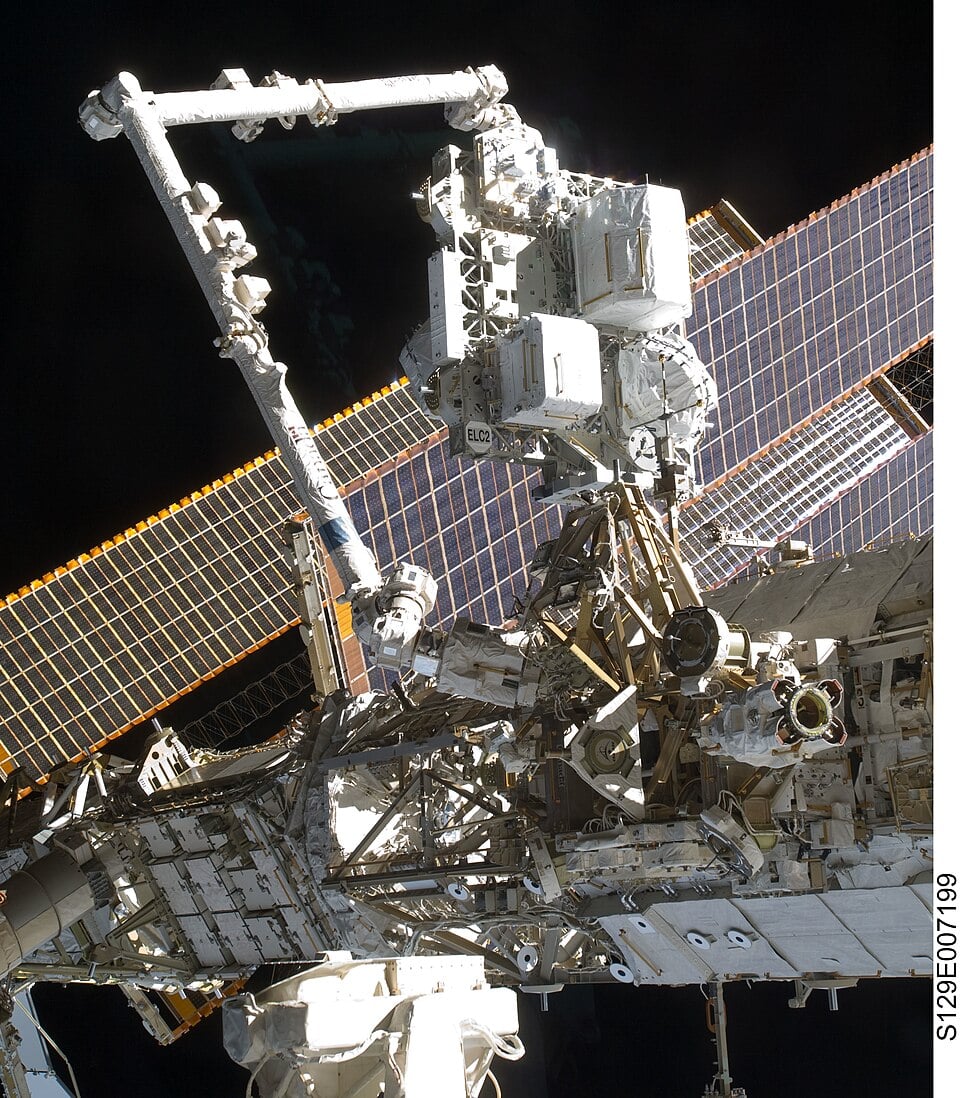
Research on soft matter has taken a significant leap as scientists from Politecnico di Milano and Université de Montpellier established a new experimental facility aboard the International Space Station (ISS). This initiative, named COLIS, aims to study how materials like mayonnaise and other soft substances behave in the absence of gravity.
Understanding soft matter is crucial as it encompasses everyday products such as gels, foams, and emulsions found in cosmetics, pharmaceuticals, and food. These materials undergo gradual changes over time, influenced by gravity. On Earth, particles within these substances settle and rearrange, making it difficult to ascertain their true behavior. By relocating experiments to the ISS, researchers can observe soft matter processes without the constant interference of gravitational forces.
Insights from COLIS Experimentation
The COLIS facility represents over 25 years of collaboration between physicist Luca Cipelletti from the Laboratoire Charles Coulomb and Roberto Piazza, head of the Soft Matter laboratory at Politecnico di Milano. This state-of-the-art laboratory employs advanced optical techniques to investigate the internal dynamics of materials without causing disruption.
One of the primary methods used is dynamic light scattering, which analyzes the passage of laser beams through samples. This technique reveals subtle variations in the materials, known as speckle patterns, that indicate how gels and other soft substances restructure over time. The facility is also capable of precisely heating samples to initiate aging processes, allowing researchers to monitor changes at the molecular level.
Initial findings have already yielded surprising results, indicating that gravity’s influence on soft matter is more significant than previously thought. The research team discovered that material properties could change dramatically over extended timescales when gravitational effects are removed.
Implications for Industry
The insights gained from the COLIS project hold substantial promise for various industries. Pharmaceutical companies require drugs that remain stable for years, while cosmetics manufacturers strive for creams that do not separate. Additionally, food producers seek emulsions that maintain consistency throughout distribution and storage.
Understanding how these materials behave in a weightless environment could lead to revolutionary advancements in formulation design. Currently, COLIS is analyzing samples of colloidal nanoparticles, which are particularly well-suited for studying internal reorganization and aging processes without the influence of gravity.
Supported by the European Space Agency and the Italian and French space agencies, the COLIS project is part of the “Colloids in Space” program. As researchers continue to explore the behavior of soft matter in space, the potential for groundbreaking applications in various fields becomes ever more apparent.
This research not only broadens the understanding of material science but also paves the way for innovations that could enhance the effectiveness and stability of everyday products we rely on.