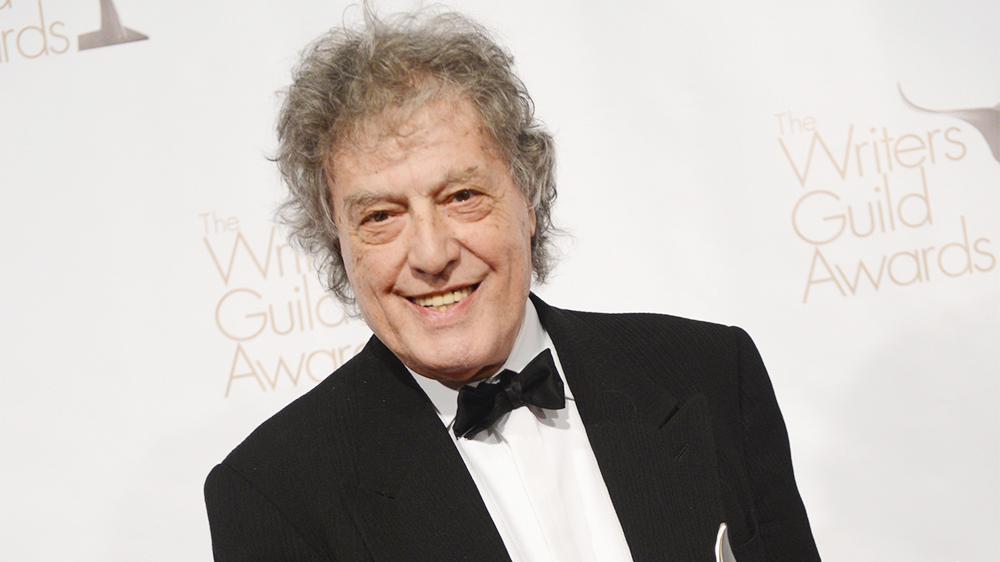
Renowned playwright and screenwriter Tom Stoppard has passed away at the age of 88, as confirmed by The BBC. Stoppard, known for his exceptional contributions to theatre and film, was a four-time Tony Award winner and an Oscar recipient for his screenplay of Shakespeare in Love. His death marks the end of an era for theatrical artistry characterized by clever wordplay and profound themes.
Born on July 3, 1937, in Zlin, Czechoslovakia, Stoppard fled with his family to Singapore just before the Nazi occupation. His early experiences shaped his artistic voice, influencing his exploration of identity and belonging throughout his career. The term “Stoppardian” emerged to describe works that combine humor with philosophical inquiry, reflecting his unique style.
Stoppard’s breakthrough came in 1966 with the play Rosencrantz and Guildenstern Are Dead, which focused on two minor characters from Shakespeare’s Hamlet. Though initially met with mixed reviews at the Edinburgh Fringe Festival, the play was later produced by the National Theatre and Broadway, earning Stoppard his first Tony Award for Best Play in 1968.
Exploring Complex Themes Through Wit and Humor
Initially, Stoppard’s work faced criticism for being overly clever and lacking emotional depth. Critics like Dennis Kennedy noted that his earlier plays sometimes seemed more focused on showmanship than substantive themes. However, later works such as The Real Thing (1982) and Arcadia (1993) showcased his ability to weave emotional complexity into his narratives, allowing his trademark wit to complement deeper explorations of love, fidelity, and existential questions.
In the 1970s, Stoppard continued to gain acclaim with plays like Jumpers (1972) and Travesties (1974), which garnered significant recognition in the UK and won a Tony Award. Stoppard’s ability to tackle political themes was evident in works such as Every Good Boy Deserves Favour (1977) and Night and Day (1978), both of which illustrate his engagement with contemporary issues.
His trilogy, The Coast of Utopia, premiered in 2002 and delved into intellectual and political life in Russia before the revolution, spanning nine hours and later winning the Tony for Best Play in 2007. Stoppard’s ability to blend history with philosophy and personal narratives made his works resonate deeply with audiences.
A Multifaceted Career in Theatre and Film
Stoppard was not limited to the stage; his film work was equally impressive. He co-wrote the Oscar-nominated script for Brazil (1985) and adapted several notable novels for the screen, including Anna Karenina (2012) and Empire of the Sun (1987). His versatility extended to television with the acclaimed miniseries adaptation of Ford Madox Ford’s Parade’s End (2012), further solidifying his status as a leading writer in multiple mediums.
Despite his success, Stoppard remained modest about his achievements. In a 2008 interview with The Guardian, he remarked, “You can’t help being what you write and writing what you are,” capturing the essence of his relationship with his work.
Stoppard’s personal life was marked by two marriages and four sons, including actor Ed Stoppard. His journey from a war-torn childhood in Czechoslovakia to becoming a celebrated figure in British arts showcased not only his talent but also his resilience and adaptability.
The legacy of Tom Stoppard will endure in the world of theatre and beyond, as his works continue to inspire and challenge new generations of playwrights and audiences. His blend of intellectual rigor and theatrical flair has left an indelible mark on the landscape of modern drama.