Deep beneath the lush greenery of the Yucatán Peninsula, a remarkable subterranean world has remained largely untouched for thousands of years. The extensive underwater cave system, known as Sac Actun, is accessed through sinkholes called “cenotes” and spans thousands of kilometers. During the Late Pleistocene, from approximately 126,000 to 11,700 years ago, these caves were dry, providing a habitat for both humans and animals. Recent explorations have unveiled fossils and artifacts that offer a glimpse into this ancient ecosystem, thanks to the efforts of highly trained divers and international scientists.
In 2014, the spotlight fell on Hoyo Negro, a significant bell-shaped pit within the Sac Actun system located in Quintana Roo. This site gained notoriety for the discovery of numerous fossils, including that of Naia, one of the three oldest human skeletons identified in the Americas. The pit was first discovered in 2007 by divers Alejandro Alvarez, Franco Attolini, and Alberto Nava Blank. Following this, the Instituto Nacional de Antropología e Historia (INAH) established the Hoyo Negro Underwater Archaeological Project in 2010 to further investigate the area.
Exploring the Depths of Sac Actun
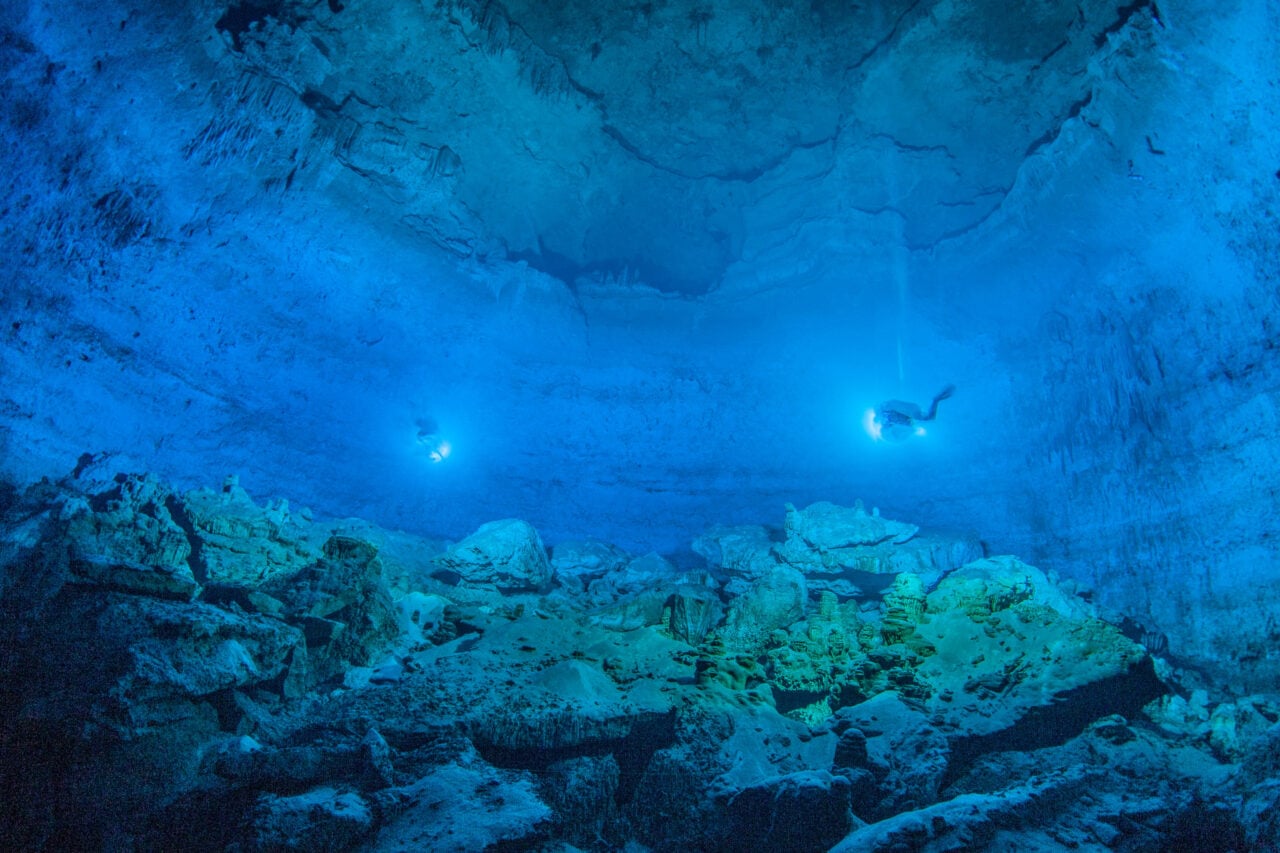
Diving into the depths of these subterranean tunnels is perilous. Roberto Chávez Arce, co-director of the project, has explored this underwater maze since 2011. His stunning underwater photography has allowed scientists to visualize the cave’s contents. The darkness and unknown nature of Sac Actun posed significant risks to divers, who must carry essential safety equipment, including breathing apparatus, lines for navigation, and underwater lights. “We need redundant gear in case [anything] fails,” Chávez Arce stated, emphasizing the importance of preparation in such hazardous conditions.
Accessing Hoyo Negro has improved over time. Initially, divers entered through a cenote located 3,000 feet (914 meters) from the pit, requiring nearly an hour of swimming. Now, a newly discovered cenote is just 250 to 300 feet (76 to 91 meters) from Hoyo Negro, and divers use motorized scooters for quicker access. Mapping the cave system has also evolved from basic tools to advanced structure-from-motion (SfM) photogrammetry, enabling the creation of detailed 3D models of the cave.
At its widest point, Hoyo Negro measures over 120 feet (32 meters) in diameter at its rim, expanding to more than 203 feet (67 meters) at the bottom and plunging nearly 200 feet (60 meters) deep. This immense size underscores the cave’s significance in understanding the region’s prehistoric life.
Insights from the Past
Sediment analysis indicates that the water level in Hoyo Negro fluctuated over millennia. Researchers found that water reached the cave’s bottom at least 9,850 years ago, with the cave eventually becoming entirely submerged around 6,000 years ago. This timeline provides critical context for understanding when early humans and animals might have accessed the cave.
During the Pleistocene, the ecosystem of Quintana Roo differed markedly from today. Instead of dense jungle, the region was likely a savanna, making the availability of fresh water in the caves particularly appealing. Yet, the dry cave environment posed dangers, as evidenced by the fossilized remains found at the bottom of Hoyo Negro, including that of Naia. Discovered by the same divers in 2014, Naia is the most complete skeleton of the three oldest known humans in the Americas, dated to approximately 12,970 to 12,770 years ago.
Naia’s remains indicate a tragic end; she likely fell into the pit, suffering a broken pelvis upon impact. Dr. James Chatters, a co-director of the project, noted that this injury suggests she died young, estimated to be between 15 and 17 years old. Analysis of her bones reveals she was “very slightly built,” standing about 4 feet 8.5 inches (1.5 meters) tall and had given birth at least once. Surprisingly, her diet suggests a lack of reliance on marine resources, which raises questions about her group’s lifestyle and travel patterns.
The presence of ochre mining in nearby cave systems hints at another reason humans ventured underground. Traces of ochre, a mineral used for various purposes including decoration and burial practices, have been found, indicating that early inhabitants valued this resource.
The cave is also rich in animal fossils, including remains of extinct species. Among the highlights is the discovery of the short-faced bear, specifically Arctotherium wingei, with at least nine individuals found in Hoyo Negro. This finding marks the first record of these bears outside South America, showcasing the significance of the cave as a paleontological site.
New Discoveries and Ongoing Research
The Hoyo Negro project continues to yield groundbreaking findings. Recently, a new genus and species of ground sloth was identified, named Nohochichak xibalbahkah, reflecting its significance within the local context. The study of gomphotheres, extinct elephant-like creatures, is ongoing, with researchers investigating their presence in the Yucatán’s cave systems.
Schubert, a member of the project, highlighted the importance of these caves in understanding the biogeographic history of North American fauna. The fossils found within Hoyo Negro not only provide insight into the past ecosystems but also enrich our understanding of migration patterns influenced by changing climates.
In summary, the ongoing research in Hoyo Negro and the broader Sac Actun system reveals a wealth of information about the Ice Age and early human activity. The collaboration between divers and scientists continues to unlock the secrets of this underwater world, enhancing our knowledge of both ancient life and the environmental conditions that shaped it. This unique research not only deepens our understanding of prehistoric ecosystems but also emphasizes the importance of preserving such significant archaeological sites for future generations.